
The Product Manager’s Superpower: How AI Is Transforming UX and Digital Businesses
From Netflix to Duolingo: How Leading Product Teams Use AI as a Design Partner, Not Just a Feature


As part of a knowledge-sharing exchange between independent creators, this edition is a special collaboration between Design with Blessing and The Product Path. We believe that great design and product thinking go hand-in-hand for maximum user experience. I urge you to sit back, relax and read through this informative write-up. And for more brilliant insights on UX Design and Artificial Intelligence, feel free to check out and subscribe to Blessing’s Newsletter.
I still recall the afternoon I dragged my mum’s little kitchen wooden stool under the shade of our mango tree, trying to sketch a “product idea.” I was maybe twelve years old. I had a notebook, pencil and crayons, and I drew a “magical blouse” that would adjust its fit automatically. My younger sibling laughed; “How will it know your body size tomorrow?” But I was damn serious. That childlike curiosity to build something that adapts has shaped how I view technology, design, and growth to this day.
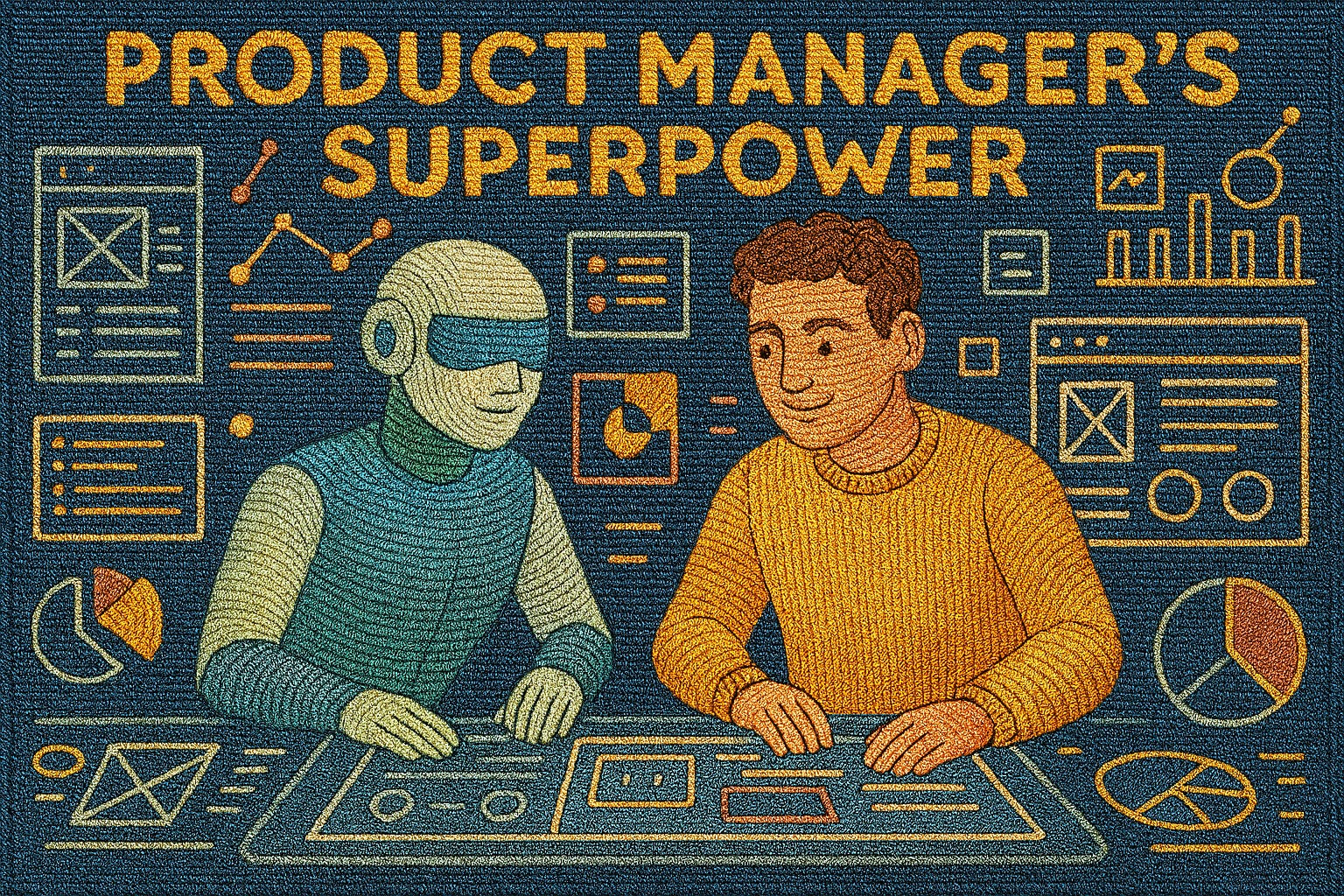
Fast forward years later, as I dove into UX design and product thinking, I realized that even if I’m not a Product Manager (PM) by title, I live in that intersection of business, design, and empathy. And now, AI is giving that intersection a new dimension. In fact, the PM’s real superpower is emerging more clearly now than ever: the ability to treat AI not as a feature, but as a design partner, as a collaborator, guide, and amplifier of human intention.
So, let’s explore how AI is reshaping what excellent product management looks like, especially when UX and digital business must align.
Why AI Matters in the PM + UX Equation
Product Managers orchestrate many forces: customer pain, business goals, technical constraints, and design ideals. Historically, much of their work involved gathering user feedback, prioritizing features, interpreting analytics, and shepherding the execution process. AI augments all of these.
If a PM can pair strategic foresight with real-time data intelligence, the product shrinks the gap between what users need and what the team builds. And when that intelligence is paired with UX empathy, the outcomes become not just usable, but delightful. AI bridges user flows, predictive signals, and personalization pathways, turning insight into action for product managers and UX teams.
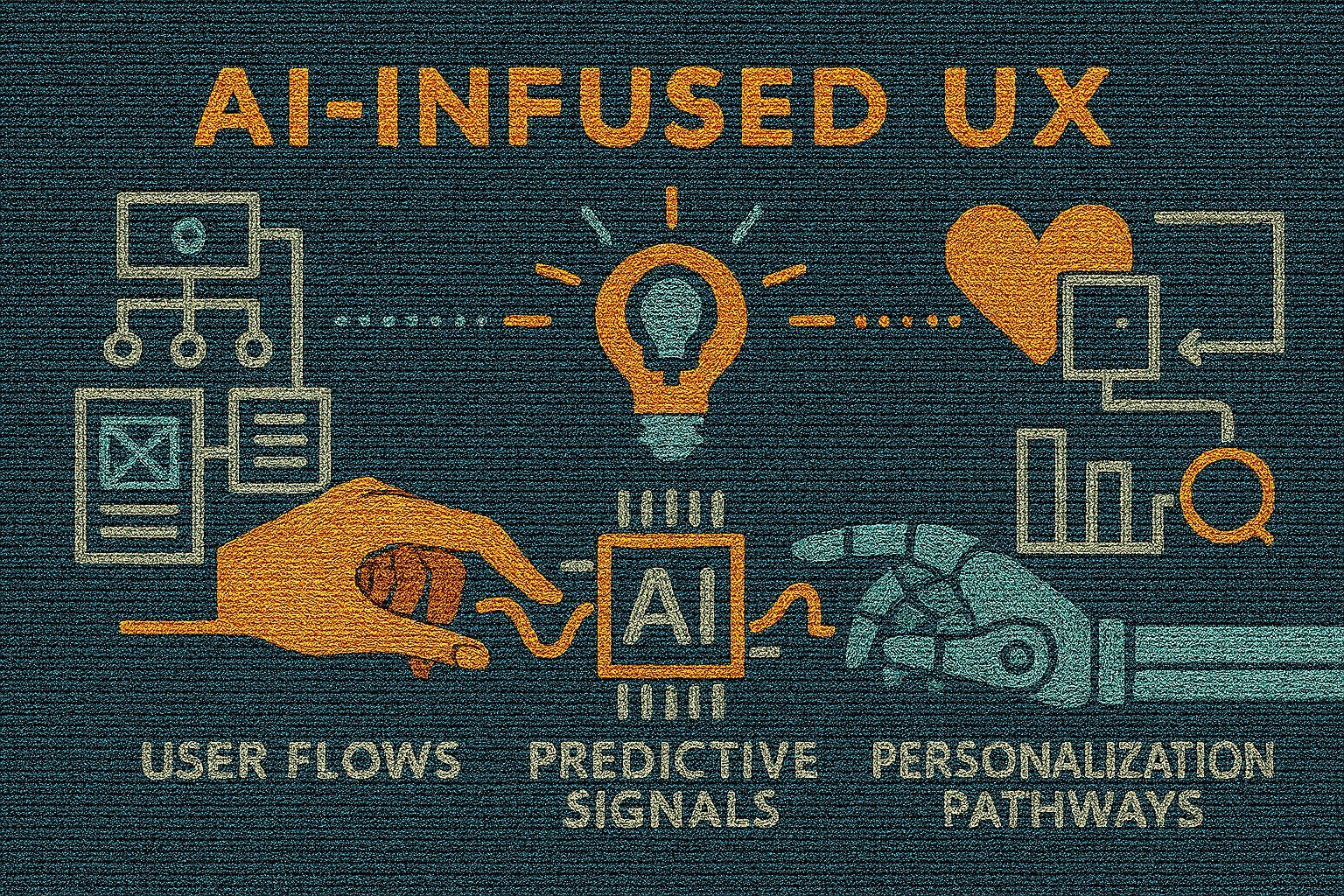
Here’s what AI brings to the table for PM + UX synergy:
1. Predictive insights about user behavior AI can spot patterns that even seasoned teams might overlook. Instead of relying only on historical metrics, machine learning models can anticipate what users are likely to do next, whether it’s abandoning a cart, churning from a subscription, or responding positively to a new feature. For product managers and UX designers, this foresight means being proactive rather than reactive.
2. Contextual personalization at scale Traditional personalization might adjust for demographics, but AI-driven personalization adapts to context, such as what a user is doing, feeling, or needing in the moment. From recommending the right content to adjusting interface complexity for neurodiverse users, AI empowers product managers to deliver experiences that feel less like “one-size-fits-all” and more like “just-for-me.”
3. Automated experimentation and optimization A/B testing has long been a PM’s toolkit essential, but AI transforms it from a slow, manual process into continuous experimentation. Algorithms can run thousands of micro-tests in the background, optimizing copy, layout, and workflows in real-time. This doesn’t just accelerate iteration cycles, it frees teams to focus on the strategic “why” behind design choices instead of getting stuck in the “how.”
4. Early detection of design friction and usability issues Instead of waiting for user complaints or support tickets, AI can surface subtle signals of friction such as hesitation, backtracking, rage clicks, or repeated task failures. These early warnings give product management teams a chance to address problems before they spiral into churn or negative reviews. For product managers, it’s like having a radar that alerts you before a storm hits.
5. Signal amplification: surfacing what truly matters, not noise
In today’s data-rich environments, the real challenge isn’t collecting information, it’s cutting through the noise. AI helps filter vast streams of feedback, analytics, and user behavior down to the signals that matter most for decision-making. By amplifying what’s meaningful and muting distractions, AI empowers PMs and designers to focus energy where it drives impact.
Below, I’ll walk you through real examples.
Case Study 1: Netflix’s Recommendation Superpower
Netflix is often cited in AI-driven product design, but its recommendation engine is truly a blueprint. The PMs behind Netflix don’t just offer “movies you may like”, they orchestrate a continual feedback loop. Each watch, each pause, each search enhances predictive models, which then feed into A/B experiments, UI variations, and UX adjustments.
According to a 2016 Nasdaq article, Netflix reduces churn by over $1 billion per year through tailored recommendations and retention-focused interfaces.
From a UX perspective, Netflix PMs think less about “feature delivery” and more about “user resonance” ensuring the system surfaces what users are likely to engage with, removing friction, and learning continuously.
The UX of Retention
The Netflix recommendation engine is a blueprint for how AI creates a defensible competitive advantage in product design:
Minimizing Time-to-Joy: Netflix famously competes not just with other streamers, but with sleep and anything else that takes a user’s attention. The primary UX goal is to ensure the user finds something compelling to watch within 60 to 90 seconds of opening the app. The AI-driven interface achieves this by displaying the most relevant titles instantly.
Personalized Imagery (A/B Testing): A key element of the UX is artwork personalization. The system doesn’t show one thumbnail for a title; it displays the image (e.g., a specific actor, a scene, a tone) that past data suggests that individual member is most likely to click, maximizing the efficiency of the homepage.
Maximizing Content Value: By efficiently recommending even niche or lesser-known titles, Netflix maximizes the return on its massive content investment, thereby saving money that would otherwise be wasted on unseen content, which is the source of the over $1 billion figure.
Case Study 2: Duolingo’s Adaptive Learning UX
Duolingo uses AI-driven personalization to adapt lesson difficulty, pacing, repetition frequency, and hints to each learner’s performance curve. The effect is more retention, less drop-off, and a sense that the app “knows you.” The research published by Duolingo’s team shows how these adaptive paths increase learning speed and engagement.
PMs and UX designers behind Duolingo don’t just launch what seems clever; they measure each experiment rigorously, iterate designs, and optimize the experience so learners rarely feel overwhelmed or under-challenged.
UX Lesson: The Personalization Loop
Duolingo’s success illustrates the Personalization Loop in UX:
Data Collection: The system constantly tracks user inputs, response times, and mistakes to create a granular profile of their knowledge.
AI Prediction (Birdbrain): The AI predicts the learner’s “forgetting curve” and selects material that the user is about to forget, but not yet struggling with.
Adaptive Delivery: The AI adjusts the pacing and hints in real-time. For instance, if a user is fast and accurate, the difficulty escalates, creating a feeling of being challenged but not overwhelmed.
Retention and Engagement: By minimizing frustration and maximizing learning efficiency, the user feels the app is effective and tailored, driving the long-term streak and engagement.
Case Study 3: Canva + Magic Write + Design Assist
Design SaaS company Canva has embedded generative AI directly into the product experience. Features like Magic Write (for content generation) and Design Assist (auto layout suggestions) let users move faster without losing control. Canva’s success lies in giving power to beginners while respecting the control of pros.
For product teams, the challenge is to balance automation and control. Users often resist “smart defaults” if they feel robbed of agency. So PMs must guard that boundary. Canva carefully surfaces AI options, lets users override, and ensures the interface remains predictable.
Guarding User Agency
Canva’s successful AI strategy provides a powerful blueprint for managing the challenge of automation vs. agency in UX:
Augmentation over Replacement: Canva avoided positioning its AI as a designer replacement. Instead, it serves as a powerful co-pilot, a concept known as Augmented Intelligence. Magic Write provides content, but the human must still make the design choices (color, font, layout).
The “Design Assist” Nudge: For beginners, Design Assist immediately surfaces smart, professional-quality options that act as a starting point. This eliminates the frustration of a blank canvas without forcing a specific direction, allowing the user to feel successful and in control of the final design.
Rapid Iteration: By integrating AI directly into the editing flow, the time between generating an idea and seeing it visually realized is reduced to seconds. This velocity drives higher user engagement and cements the product’s value proposition of making complex tasks easy and fast for non-designers.
How Product Managers Can Harness This Superpower
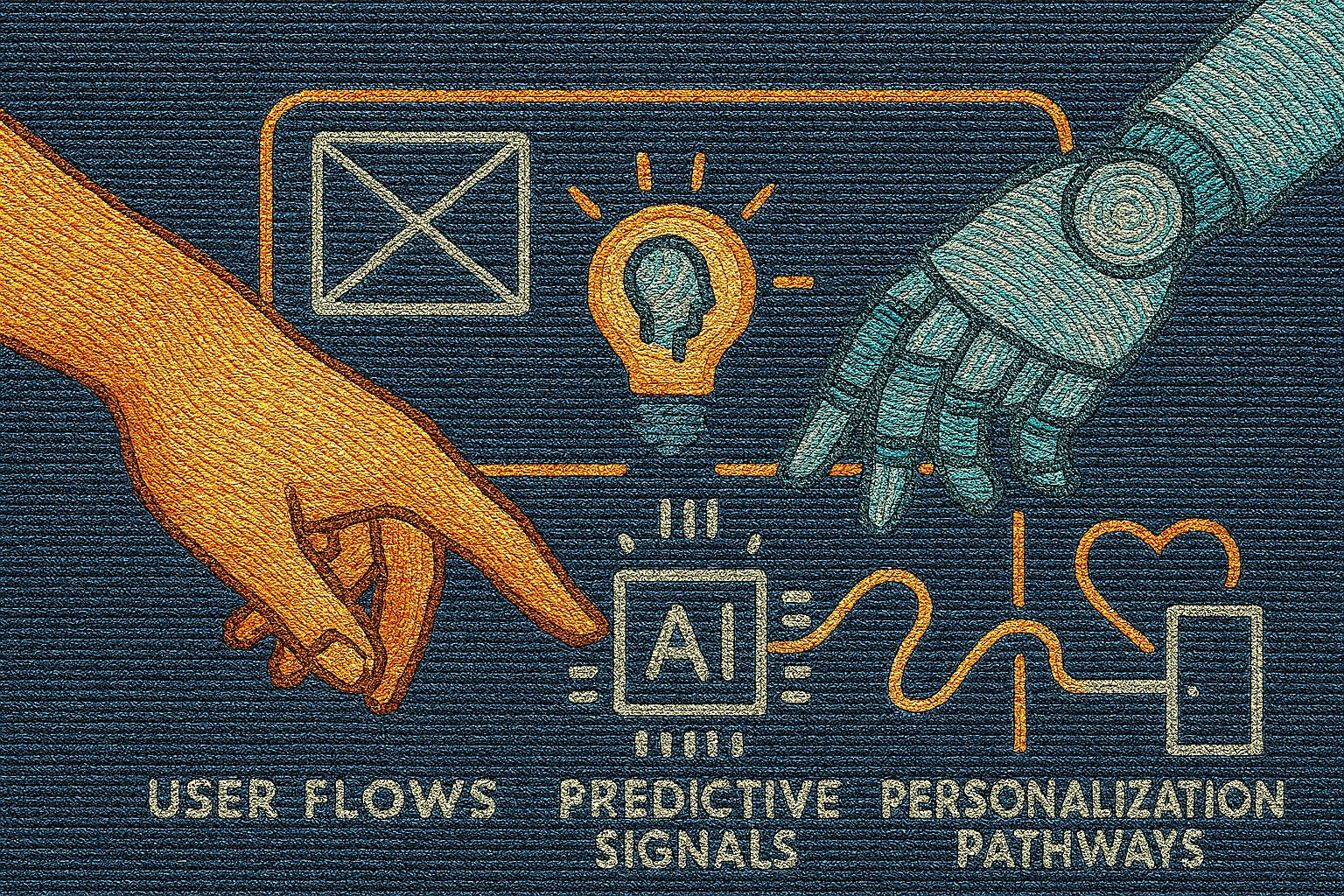
If you are leading a product, even without a formal PM title, here are practical ways to bring AI into your toolkit:
1. Start with Intention, Not Automation
Ask: What human problem am I solving? AI is not magic, it’s amplification. Define your “north star metric” before you apply AI.
2. Layer Explainability & Guardrails
Always provide users context: Why did the system suggest this? What data did it use? How can the user override it? Transparency builds trust.
3. Build Human + AI Collaboration Flows
Design workflows where AI does heavy lifting (data, patterns), and humans make nuanced calls. The split of labor matters.
4. Experiment Fast, But Monitor Continuously
Use AI-driven A/B frameworks. But don’t abandon remote usability studies or user interviews. AI can point to friction, but humans decode meaning.
5. Create Ethical, Inclusive Defaults
Don’t let biases in data or models capture power imbalance. PMs must audit models, diversify training data, and include underrepresented users in testing.
Challenges & Cautions
Even with promise, pitfalls abound:
Hallucinations & incorrect outputs: AI systems can confidently output nonsense. PMs must guard downstream effects.
Bias amplification: If training data is skewed, you reinforce inequities.
Over-reliance on AI efficiency: Speed is great, but if design quality or user trust erodes, you lose long-term value.
Ownership & intellectual property concerns: Who owns AI-generated content? Transparent policy is essential.
From Childhood Puzzles to Product Harmony
That little experiment with my mother’s kitchen puzzle taught me that order is built, not forced. Today, when I design or research, I’m always looking for patterns, balance, and harmony among constraints. AI is now part of that delicate part of us, not just crank up automation, but syncing pieces wisely.
Product Managers have a rare opportunity to wield AI not as a hammer but as a lens. This is a way to see deeper into user behavior, to act with empathy, and to deliver digital business that doesn’t just scale but resounds.
So to all PMs and creators out there, your superpower is not just speed, it’s intention. Use AI to help people, not just to build features.
If this perspective resonated, I would love for you to share your thoughts or experiments where you’ve combined AI + UX + product.
Also, if you enjoyed this, consider following Design with Blessing for more human-forward ideas.
Are you interested in the topic? There’s much more to come! To receive new posts and support The Product Path, consider becoming a free subscriber.
References
Building Better Product Experiences with AI: How Netflix and Amazon Mastered Recommender Systems
Netflix: Optimizing the user experience and investment decisions using Machine Learning
Netflix’s Billion-Dollar AI Strategy Your Team Can Actually Use
Analyzing Duolingo from Product Design Perspective after 400 Days Of Non-Stop Practice
#BlessingNuggets #ProductManagement #UXDesign #GenerativeAI #HumanCenteredTech
 | A guest post by
|